Alphablocks: Letter Fun!
- 3.8
- Rating
- 10.00K
- Installs
- $3.49
- Price
 Analysis by App-foxy
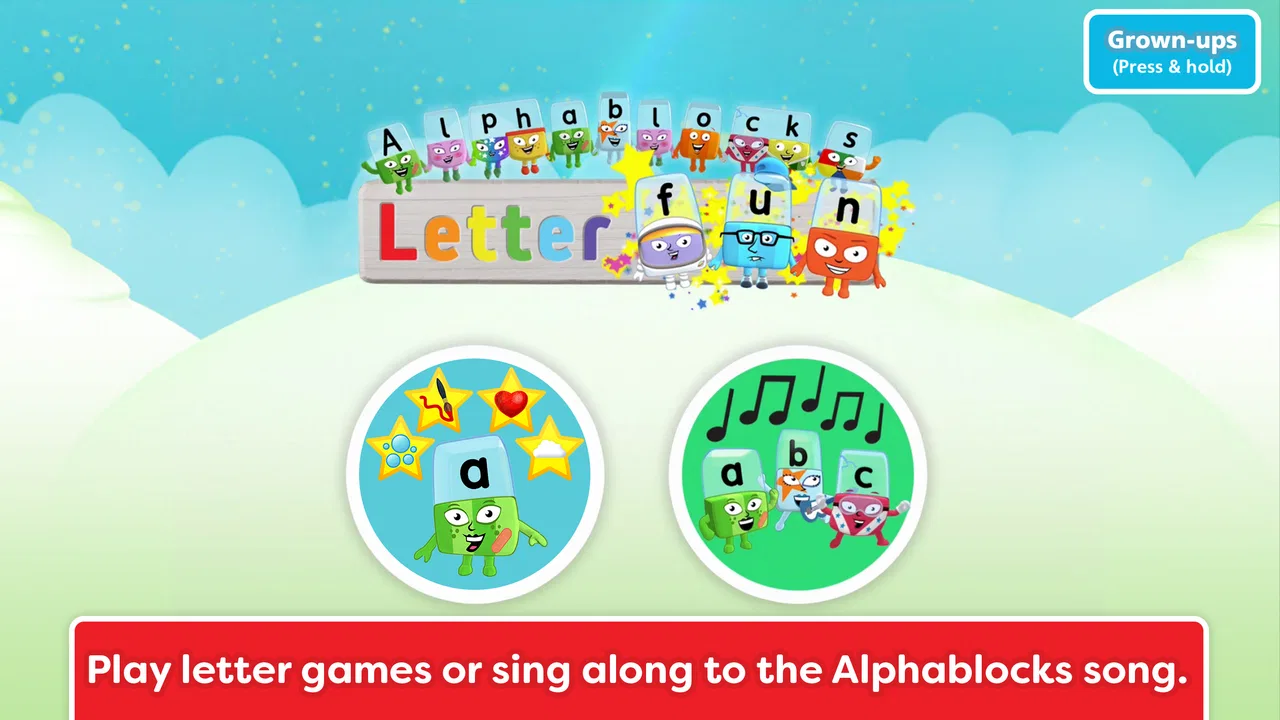
Alphablocks: Letter Fun! is the kind of educational game that makes a strong first impression because it turns early phonics practice into something children can approach as play. I found the experience most appealing for young learners who are beginning to connect written letters with the sounds they hear. The presentation is friendly, the subject is focused, and the activities feel less intimidating than a formal reading exercise. At the same time, its real test is not whether a child enjoys it once, but whether it remains useful after the novelty of meeting the Alphablocks has worn off.
Developed by Blue Zoo, this is a paid educational game priced at $3.49. It is suitable for Everyone, runs on devices using Android 8.0 or later, and its current version is 1.7.4. The game has reached over 10 thousand installs, with an average rating of 3.8 from more than 170 ratings and over 20 written reviews. Those figures suggest a modest, established product rather than a huge learning platform, which matches my impression: this is a compact tool with a clear purpose, not an all-in-one reading curriculum.
What the first week feels like
During the first few sessions, the main attraction is the way phonics is presented through recognizable characters instead of abstract drills. A child is not simply looking at a letter on a worksheet and repeating a sound. The Alphablocks give the lesson a playful identity, which can make the first contact with letter sounds feel more inviting. For a parent, that matters because resistance is often the first obstacle in early learning. If a child willingly opens the game, the educational work has a better chance of happening.
You May Also Like

 AccuWeather: Weather Radar
AccuWeather Review: A Quick, Clear Forecast for Everyday Decisions
For everyday plans, the best forecast is the one you can understand quickly. AccuWeather makes rain timing, radar, and local conditions easy to act on, with a few trade-offs.

 Hill Climb Racing
Why Hill Climb Racing Still Turns Crashes Into One More Run
A tiny car, a bumpy hill and one more upgrade: Hill Climb Racing keeps resurfacing because its simple chaos makes every near-miss feel personal.

 AliExpress - Shopping App
AliExpress Makes Global Shopping Feel Personal, but Shoppers Bear the Risk
AliExpress turns a global marketplace into a pocket-sized discovery engine. Its reach is useful, its shopping loop compelling, and its trade-offs easy to miss.

 Lords Mobile: Kingdom Wars
Lords Mobile Is a Kingdom-Building Routine, Not a Quick Match
A case-by-case verdict on the building, battles, device demands, and social commitments that make Lords Mobile rewarding for some players and exhausting for others.

 PDF Scanner app - TapScanner
TapScanner Makes Paperwork Easier to Capture, Check, and Share
TapScanner makes scanning with a phone feel less like a rescue operation and more like a dependable step in getting work done. Its capture tools are useful, though not flawless.

 Block Blast!
 Shows How Much a Puzzle Game Can Leave Out
A quiet grid game shows why puzzle players increasingly value instant clarity, repeatable skill and low-pressure play—and where the genre still needs to catch up.
More From Our News Desk
View All News


I would introduce it in short sessions rather than handing over the device for unrestricted play. A few minutes focused on listening, identifying, and repeating sounds is more valuable than a long session in which the child taps quickly without thinking. The game works best when an adult occasionally asks a simple follow-up question away from the screen: “What sound does that letter make?” or “Can you find something nearby that starts with that sound?” That small transfer from screen to real life helps prevent the activity from becoming passive entertainment.
The early appeal also comes from its narrow focus. Many children’s learning apps try to combine letters, numbers, drawing, stories, rewards, and mini-games into one package. Alphablocks: Letter Fun! stays centered on phonics letters and sounds. I see that as a strength for a child who needs a gentle starting point, especially one who becomes overwhelmed by busy educational apps. The trade-off is that children looking for a broad variety of activities may lose interest sooner.
One practical way to use it in the first week is to pair it with a predictable routine. I would choose the same time each day, perhaps after breakfast or before a bedtime story, and keep the goal small: listen carefully to a few sounds, then stop while the child is still engaged. This creates a useful distinction between practice and free play. The game supplies the prompt, but the adult supplies the pacing and encouragement.
The most important early habit is active listening, not fast tapping. If a child rushes through the visual parts without saying the sounds aloud, the session may look successful while producing little learning. I would pause whenever possible and invite the child to repeat the sound. That makes the game a starting point for spoken practice rather than a substitute for it.
Who gets the most from the opening sessions
This game is a good match for preschool and early primary learners who are just becoming familiar with letter sounds, as well as children who need extra repetition outside school. It can also suit a parent who wants a simple activity to use alongside books and conversation without committing to a large subscription-based learning service. Because the focus is so specific, it is easy to understand what the child is practicing.
I would be more cautious if the child already reads simple words confidently. In that situation, the introductory phonics material may feel too basic, and a reading app built around blending, vocabulary, or short stories could offer more progress. It is also not the best choice for a child who needs a carefully individualized teaching plan. A game can reinforce lessons, but it cannot observe pronunciation or adapt like a patient adult, teacher, or specialist.
Another question parents often have is whether the price changes the way the app should be judged. In my view, the $3.49 cost makes sense only if the family will use it as a recurring practice tool rather than a one-evening novelty. A paid app can be preferable to a free one crowded with distractions, but the purchase itself does not guarantee lasting value. The child’s age, current reading level, and willingness to repeat basic sounds are more important than the low entry price.
How the value holds up after the novelty
After the first week, the game’s value depends on whether it becomes part of a wider learning pattern. Phonics is repetitive by nature. Children need to hear and use sounds many times before the connection becomes automatic, so repetition is not a flaw on its own. The question is whether the game gives that repetition enough context to remain meaningful. I would use it as one station in a short routine: game practice, a physical book, and a few spoken examples.
For example, a parent could let the child explore a sound in the game, then choose a picture book and point out a couple of words beginning with that sound. The adult does not need to turn the reading time into a test. Simply noticing the sound in a real word gives the on-screen lesson somewhere to go. This is one of the more useful ways to extend the app’s life, because the game itself is not expected to carry the entire reading journey.
A second effective workflow is alternating responsibility. On one day, the child can lead and identify the sounds independently. On another, the parent can sit nearby and ask for a spoken response before allowing the next interaction. This keeps the routine from becoming automatic tapping. It also reveals whether the child genuinely remembers the sound or is only following familiar visual cues.
The app is likely to have the strongest month-to-month value for families who want reinforcement rather than a complete course. I would not expect it to replace school instruction, shared reading, handwriting practice, or conversation. Its role is narrower and more manageable: give a young learner another approachable way to revisit foundational sounds. That narrow role can be an advantage when a child needs practice but does not want another worksheet.
There is also a useful distinction between recognition and application. A child may recognize a letter and repeat its associated sound inside the game, yet still struggle to hear that sound at the beginning of a spoken word. To address that gap, I would occasionally close the app and play a simple listening game using household objects. Ask whether “cup” begins with the sound just practiced, then try a word that does not. This turns the game’s lesson into an everyday skill without pretending the app can do that transfer automatically.
Keeping the routine useful without making it feel like homework
Maintenance is not technically complicated, but it does require adult attention. The main burden is deciding when to use the game, noticing whether the child is engaged, and preventing repetition from becoming empty screen time. I would keep the device available for planned sessions rather than treating it as an emergency distraction every time the child is bored. That makes the phonics purpose clearer and helps preserve the sense that the activity has a beginning and an end.
It is also worth changing the surrounding activity even if the in-game practice stays familiar. One session can lead into drawing a letter, another into finding objects with a matching initial sound, and another into reading a short book. These variations reduce fatigue without requiring the app itself to offer endless new content. The game becomes the consistent anchor while the adult changes the real-world follow-up.
Parents should watch for signs that the child is ready to move on. If the learner can identify the practiced sounds comfortably and begins asking about words or blending, continuing the same basic activity indefinitely may not be the best use of time. At that point, a more advanced reading resource may be better, while this game can remain an occasional refresher. Educational tools are easier to maintain when they are allowed to have a limited role instead of being forced to serve every stage.
Device compatibility is another small but relevant part of maintenance. Since the game requires Android 8.0 or later, families using older Android hardware should check that requirement before planning around it. For a household with a compatible device, the technical threshold is straightforward. I would still test the experience personally before giving it to a child, not to search for hidden promises, but to understand the pace and decide how much guidance the child will need.
Where fatigue can set in
The same focused design that makes the game approachable can eventually make it feel limited. Children who enjoy characters and repetition may return willingly, but others may want stories, drawing, movement, or a stronger sense of progression. If every session feels too similar, the child may start tapping through the material without listening. That is not necessarily a failure of the phonics content; it is a sign that the activity needs a break or a different companion exercise.
Another source of fatigue is adult expectation. A parent may buy a phonics game hoping it will produce visible reading progress quickly. Early literacy rarely works that neatly. The game can provide exposure and practice, but progress also depends on language development, attention, hearing the sounds clearly, and opportunities to use them in words. If the child is struggling consistently, more screen time is not automatically the answer. Shared reading and guidance from an educator may be more appropriate.
I also would not choose this as the only app for siblings at very different levels. A beginner may benefit from the clear focus, while an older or more advanced child could find the material repetitive. In a shared-device household, it may work better as a targeted tool for the younger learner rather than a family-wide game. That keeps expectations realistic and avoids judging the app for not offering content outside its intended stage.
Compared with free alphabet videos, this game offers a more deliberate interactive experience, but videos can provide broader songs, stories, and variety. Compared with large literacy subscriptions, it is simpler and less demanding financially, but those larger services may offer more structured progression and a wider range of reading skills. Compared with physical flashcards, it is more visually engaging and easier to repeat independently, while flashcards make it easier for an adult to observe exactly what the child knows. I see Alphablocks: Letter Fun! sitting between these options: more active than passive media, but less comprehensive than a full curriculum.
That comparison helps answer whether it deserves lasting space. It does if the family needs a focused phonics refresher and will connect the sessions to books and conversation. It does not if the main goal is advanced reading, handwriting, vocabulary growth, or a constantly changing entertainment experience. The app is strongest when its limitations are treated as boundaries rather than disappointments.
My long-term verdict
After the initial excitement fades, I still see a worthwhile place for Alphablocks: Letter Fun!, but not as a standalone reading solution. Its lasting value comes from being easy to understand, focused on a foundational skill, and suitable for short repeat sessions. The Blue Zoo characters give the practice a warmer entry point than a plain drill, which can be especially helpful for a child who needs encouragement before formal reading work feels comfortable.
My recommendation is to buy it for a young learner who is beginning phonics, enjoys character-led activities, and benefits from gentle repetition. I would use it several times across a week, keep sessions brief, and always add some spoken or printed practice away from the screen. That approach gives the game a job it can perform well without asking it to teach every part of literacy.
I would skip it for a confident reader, a child who quickly tires of repeated introductory material, or a family looking for a deep, adaptive reading program. In those cases, a library of decodable books, a more advanced literacy app, or direct support from a teacher may offer better long-term progress. The 3.8 average rating reflects a mixed but reasonably positive reception, and my own judgment lands in a similar place: useful for the right learner, but clearly specialized.
My final view is that this earns lasting space only when it becomes a small, purposeful part of a reading routine. It is not the sort of game I would expect a child to use endlessly on its own. Used with an adult’s pacing, real books, and everyday sound-hunting, however, it can make early phonics practice feel friendlier and more repeatable. That is a modest promise, but it is also the area where Alphablocks: Letter Fun! feels most convincing.
FAQs for Alphablocks: Letter Fun!
01What is Alphablocks: Letter Fun! and who is it designed for?
Alphablocks: Letter Fun! is an educational literacy app aimed primarily at preschool and early-primary children who are beginning to recognize letters, learn their sounds, and build simple words. It uses the familiar Alphablocks characters, colorful animations, and interactive activities to make early phonics practice feel like play. Parents should still choose activities according to their child’s age, reading level, and attention span.
02What can children learn by using Alphablocks: Letter Fun!?
The app focuses on foundational reading skills rather than advanced reading comprehension. Depending on the activity, children can practice identifying letters, matching letters with their sounds, blending sounds together, and recognizing simple word patterns. The playful presentation may help younger learners stay engaged, although regular practice with an adult, storybooks, and offline phonics activities is still valuable for reinforcing what they learn in the app.
03Is Alphablocks: Letter Fun! free to download, and does it include in-app purchases?
Availability, pricing, and included content can vary depending on the device, country, and version listed in the Google Play Store or Apple App Store. Some features may be available at no cost, while additional activities or content may require a purchase or subscription. Before downloading, parents should review the current store listing carefully, including in-app purchase details, trial terms, and whether payments are protected by device-level parental controls.
04Does Alphablocks: Letter Fun! work without an internet connection?
The app may require an internet connection for its initial download, updates, account-related functions, or access to certain content. Once installed, some activities may be usable offline, but this can depend on the version and the way content is delivered on your device. If you plan to use it during travel or away from Wi-Fi, open the app beforehand and test the activities you want your child to use.
05Is Alphablocks: Letter Fun! safe and suitable for children?
Alphablocks: Letter Fun! is designed as a child-focused learning experience, with simple interactions and educational content centered on early phonics. Nevertheless, parents should check the app’s current privacy information, advertising policy, permissions, and purchase settings before handing over a device. Younger children may also need supervision, especially when navigating menus, accessing external links, or using features that could lead to paid content.
Pros
- Fun phonics activities help children recognize letters and sounds.
- Bright animations and familiar Alphablocks characters keep learning engaging.
- Simple controls are suitable for young children using tablets or phones.
- Activities support early spelling and word-building practice.
- Short games work well for quick learning sessions at home or on the go.
Cons
- Some activities may feel repetitive after extended play.
- The app is mainly suited to preschool and early-learning ages.
- Parents may need to help children understand certain instructions.
- Educational content may offer limited challenge for advanced readers.
- Availability of features can vary by device
- region
- or subscription.

Alphablocks: Letter Fun!
Gallery